
Adjustable-Rate Mortgage vs Fixed-Rate Mortgage: Which Is Right for You?
Compare adjustable-rate mortgage vs fixed-rate mortgage options, learn key differences, and find out which loan type fits your budget and long-term plans.
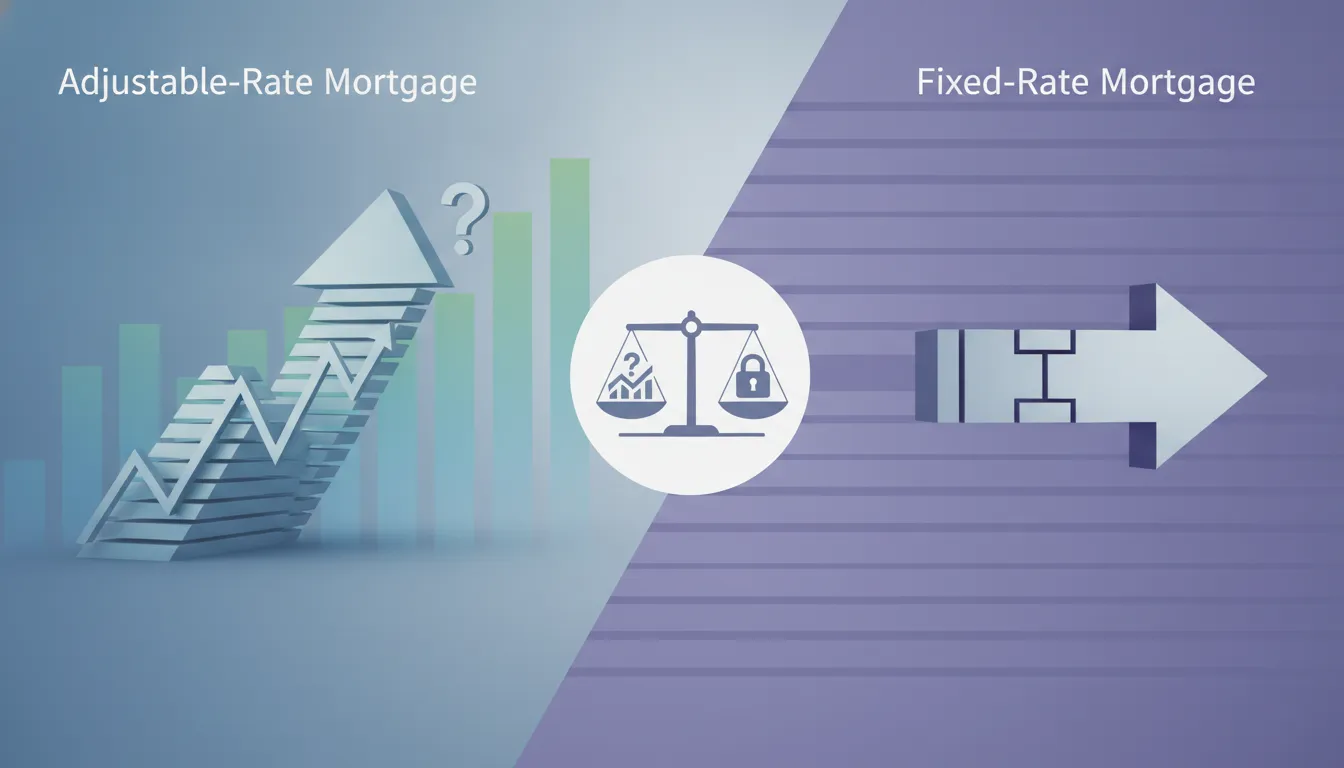
A lower starting payment can catch your attention, especially when you’re planning for a down payment, moving costs, and other expenses. But when comparing an adjustable-rate mortgage vs fixed-rate mortgage, the first payment is only part of the decision. A fixed-rate mortgage offers steady principal-and-interest payments, while an ARM may change after its initial rate period. That change could raise or lower your payment, depending on the loan terms and market rates. Understanding when adjustments begin and how much the rate can change helps you compare offers with more confidence. This guide explains the key differences, costs, and risks, so you can weigh each option against your timeline and budget.
Key Takeaways
- Match the mortgage to your plans: A fixed rate offers steady principal-and-interest payments, while an ARM’s rate may change after its introductory period.
- Compare more than the starting rate: Review the ARM’s adjustment schedule, rate caps, APR, fees, and potential future payments alongside comparable fixed-rate offers.
- Check that future payments fit your budget: Estimate higher ARM payments and compare personalized purchase or refinance quotes without relying on a future sale or refinance.
Adjustable-Rate vs. Fixed-Rate Mortgages: Key Differences
The key difference between a fixed-rate mortgage and an adjustable-rate mortgage, often called an ARM, is whether the interest rate can change. A fixed-rate loan keeps the same rate for the full term. An ARM starts with a rate that stays fixed for a set period, then may change at scheduled intervals. This affects how predictable your principal-and-interest payment will be over time.
Neither mortgage type is automatically the better choice. Your decision depends on your budget, how long you expect to keep the home or loan, and how comfortable you are with possible payment changes. When comparing offers, look beyond the starting rate. Check how long it lasts, when adjustments begin, how frequently they can occur, and how high the rate could go. The Consumer Financial Protection Bureau explains the differences between fixed-rate and adjustable-rate mortgages, including how an ARM’s terms affect future payments.
It also helps to compare the same loan amount and term across offers. A lower initial ARM payment may leave room in your current budget, but it could change later. A fixed rate offers more consistency for principal and interest, which some borrowers value when planning long-term expenses. Great Western Funding can help borrowers compare mortgage options and request a customized quote for a home purchase. Review each loan’s details with a mortgage professional before deciding.
How Fixed-Rate Mortgages Work
A fixed-rate mortgage has an interest rate that stays the same throughout the loan term. As you repay the loan, the principal-and-interest portion of your monthly payment generally remains steady. Common options include 15- and 30-year terms. A shorter term typically means larger monthly principal-and-interest payments, but it may reduce the time you pay interest.
A steady payment can make household budgeting more straightforward, especially if you plan to keep the home or mortgage for many years. Keep in mind that your total housing costs can still change. Property taxes, homeowners insurance, and other expenses are separate from your fixed mortgage rate and may rise or fall over time. When comparing a fixed-rate loan with an ARM, weigh the value of payment predictability against the ARM’s initial rate and future adjustment terms.
How Adjustable-Rate Mortgages Work
An adjustable-rate mortgage begins with an interest rate that stays fixed for an introductory period. Once that period ends, the rate can change on a regular schedule. The new rate is generally calculated using a market index plus a lender-set margin, subject to the loan’s adjustment rules and rate caps.
An ARM may have a lower starting rate than a fixed-rate mortgage, but the initial rate does not determine your payment for the entire loan term. If the index rises, your rate and principal-and-interest payment may increase. If it falls, your rate may decrease, depending on the loan terms. Before choosing an ARM, ask when the first adjustment can happen, how often later changes may occur, and what limits apply. Experian’s mortgage comparison explains the basic differences between these loan types.
What ARM Terms Like 5/1 and 5/6 Mean
The numbers in an ARM’s name describe its rate schedule. With a 5/1 ARM, the rate is fixed for the first five years. After that, it can adjust once a year. With a 5/6 ARM, the rate is fixed for five years, then can adjust every six months.
The first number tells you how long the introductory rate lasts. The second indicates how often the rate may adjust after that period. These labels don’t tell you how much the rate can change, so review the caps and other loan terms before comparing offers. Ask when the first adjustment is scheduled and how frequently future adjustments can occur. Lower’s guide to ARM and fixed-rate mortgages provides examples of common ARM formats.
How ARM Indexes, Margins, Adjustment Periods, and Caps Work
An ARM’s interest rate after the introductory period is generally based on an index plus a margin. The index reflects a broader measure of interest rates and can change over time. The margin is set by the lender and included in your loan terms. At each adjustment, the index and margin are used to calculate the new rate.
The adjustment period is the interval between rate changes. For example, an ARM may adjust annually or every six months, depending on its terms. Rate caps limit how much the rate can change at the first adjustment, at later adjustments, or over the life of the loan. These limits can help you understand the loan’s potential range, but they don’t prevent your payment from increasing. Review the index, margin, adjustment schedule, and caps in the loan documents. The CFPB’s ARM guidance offers more detail on how indexes and margins affect adjustments.
How Do Rates, Payments, and Costs Compare?
When you compare a fixed-rate mortgage with an adjustable-rate mortgage (ARM), look beyond the initial interest rate. Consider how long the rate applies, when an ARM can adjust, and how a higher payment would fit your budget. An ARM’s lower starting rate may reduce your early principal-and-interest payment, but it doesn’t guarantee lower costs over the time you have the loan.
Compare offers with the same loan amount, term, down payment, and loan type whenever possible. Then review the full monthly housing cost, including property taxes, homeowners insurance, and any mortgage insurance. Check closing costs, too, since upfront fees can affect the overall value of an offer. The Consumer Financial Protection Bureau’s guide to fixed-rate and adjustable-rate mortgages explains how the two rate structures work.
Review the Loan Estimate for each offer and ask about any terms or fees you don’t understand. Great Western Funding’s home-purchase loan options include fixed-rate and adjustable-rate mortgages. Comparing the same details across offers can help you see what you may pay now and what could change later.
Compare Starting and Future Rates
A fixed-rate mortgage keeps the same interest rate for the full loan term, making the scheduled principal-and-interest payment predictable. An ARM usually starts with a lower rate for a set period. After that, its rate can change at scheduled intervals based on the loan’s terms and market conditions.
Ask when the first adjustment can happen, how often later adjustments occur, and which index and margin determine the new rate. Also review the rate caps, which limit how much the rate can change at each adjustment and over the loan’s life. The CFPB’s explanation of ARM loans outlines these differences. Compare an ARM’s possible future rates with the fixed-rate offer, rather than assuming its introductory rate will last.
Understand Principal and Interest Payments
Your principal-and-interest payment repays the amount you borrowed and covers the interest charged on the loan. With a fixed-rate mortgage, the scheduled principal-and-interest payment generally stays the same throughout the term. The share of each payment that goes toward principal versus interest changes over time, but market rate changes won’t alter the loan’s fixed rate.
With an ARM, the principal-and-interest payment may change after the introductory period. If the rate rises, the payment can increase. If the rate falls, it may decrease, depending on the loan’s terms. Experian’s overview of fixed and adjustable-rate mortgages explains why fixed rates offer more predictability. Ask for payment estimates at the introductory rate and at higher rates that could apply later.
Factor In Taxes, Insurance, and Other Housing Costs
Your monthly housing payment may include more than principal and interest. If your lender collects escrow, the payment may also cover property taxes and homeowners insurance. You may also owe mortgage insurance, depending on factors such as your loan program and down payment. Check what each estimate includes so you’re comparing the full monthly cost, not just the loan payment.
A fixed interest rate doesn’t keep your total housing payment unchanged. Taxes, insurance premiums, mortgage insurance, and escrow requirements may change over time. With an ARM, principal and interest may change as well. Lower Mortgage’s comparison of fixed and adjustable rates explains how costs beyond the interest rate can affect your payment. Ask which expenses are included in each quote and which you’ll pay separately.
Compare APR, Points, Closing Costs, and Refinance Costs
The interest rate is only one part of a mortgage offer. Compare the annual percentage rate (APR), which reflects the interest rate and certain loan costs, as well as any points. Points are upfront charges that may lower the interest rate. Whether paying them makes sense depends in part on how long you expect to keep the loan.
Review lender fees, third-party charges, and total closing costs for each offer. With an ARM, consider costs over the time you expect to keep the loan, but don’t assume you’ll sell or refinance before the rate adjusts. Refinancing can involve new costs, and you’ll need to qualify based on your circumstances at that time. Lower Mortgage’s rate comparison guide recommends reviewing the rate, APR, points, fees, and closing costs together.
Estimate How an ARM Payment Could Change
Ask the lender for payment estimates at the ARM’s introductory rate and at higher rates allowed by its caps. Find out when the first adjustment can occur, how often the rate can change, and the limits for each adjustment and over the loan’s lifetime. This gives you a more complete view than the initial payment alone.
Then compare those estimates with your budget, including taxes, insurance, and other housing expenses. If the index rises, the rate and payment may rise; if it falls, the payment may decrease, depending on the loan’s terms. The CFPB explains how ARM rate changes can affect payments. Ask what the maximum possible payment could be under the loan’s caps, and consider whether you could manage it without depending on a future sale or refinance.
What Are the Pros and Cons of Each Mortgage Type?
A fixed-rate mortgage offers predictable principal-and-interest payments, while an adjustable-rate mortgage (ARM) may start with a lower rate that can change later. Neither option is automatically cheaper or better for every borrower. Compare the payment you can expect at the start with the uncertainty and costs you may face over time.
Fixed-Rate Benefits: Predictable Principal and Interest Payments
A fixed-rate mortgage keeps the same interest rate for the full loan term. As a result, the principal-and-interest portion of your payment stays predictable, making it easier to plan your budget. Fixed-rate mortgages commonly have 15- or 30-year terms. A 15-year loan usually requires a larger monthly payment than a 30-year loan, but it lets you repay the balance sooner.
This consistency can suit borrowers who expect to keep their home or loan for many years and prefer not to plan around interest-rate changes. Remember that your full housing payment may still change if property taxes, homeowners insurance, or other costs increase. Experian’s fixed-rate mortgage overview explains how a fixed rate keeps principal-and-interest payments steady.
Fixed-Rate Tradeoffs: A Potentially Higher Starting Rate
A fixed-rate mortgage may have a higher starting rate than an ARM, depending on the loan offers available when you apply. That could mean a higher initial principal-and-interest payment, which may affect your budget and the amount you can qualify to borrow. In exchange, your rate won’t adjust upward later, so you can plan around the same principal-and-interest payment for the loan term.
Compare actual offers instead of assuming one mortgage type will always cost less. Review the interest rate, APR, fees, loan term, and estimated payment. If a fixed-rate payment feels high, ask whether another term or down payment would make it more manageable. You can compare fixed-rate purchase loan options with an ARM based on your goals and finances.
ARM Benefits: Potentially Lower Starting Payments
An ARM usually starts with an introductory period when the interest rate stays fixed. Its initial rate may be lower than the rate on a comparable fixed-rate loan, which can also lead to a lower starting principal-and-interest payment. This may appeal to borrowers who expect to move, sell, or pay off the mortgage before the first rate adjustment.
That plan is not guaranteed, and a lower starting payment does not tell you what the loan will cost later. After the introductory period, the rate can change according to the loan terms and market conditions. Compare the initial period and adjustment schedule with your expected time in the home, then consider whether you could manage a higher payment. Experian’s comparison of fixed-rate and adjustable-rate mortgages explains how an ARM’s rate may change after its introductory period.
ARM Risks: Rate Changes Can Raise Payments
When an ARM’s introductory period ends, the interest rate may change at scheduled intervals. If the rate rises, your principal-and-interest payment can rise as well. That can make long-term budgeting harder, particularly if you plan to keep the mortgage for years or have limited room in your budget for higher housing costs.
An ARM may cost more than a fixed-rate loan if rates increase and you keep the mortgage, but the outcome depends on the loan terms and future rate changes. Before choosing one, check when the first adjustment occurs, how often later adjustments happen, and how the new rate is calculated. Don’t base your decision only on the initial payment. Think through whether you could afford a higher payment without relying on a future sale or refinance.
See How Rate Caps Affect Your Maximum Payment
ARM rate caps limit how much the interest rate can increase at certain points or over the life of the loan. A mortgage may include one cap for the first adjustment, another for later adjustments, and a lifetime cap. These limits help you estimate how high the rate could rise, but they do not keep your payment from increasing up to the applicable limit.
Ask the lender to explain each cap for the specific ARM you’re considering, including the highest possible rate and payment. The Consumer Financial Protection Bureau’s guide to ARM rate caps explains why first and later adjustment limits may differ. Use the loan’s terms to test how a higher payment would fit your budget, rather than assuming the rate will stay near its introductory level.
What Should Borrowers Know About ARM Risks?
An adjustable-rate mortgage can start with a lower payment, but that payment may change once the introductory period ends. Before choosing an ARM, find out when the first adjustment can happen, how often the rate may change, and what limits apply. Ask how the loan’s index and margin determine the adjusted rate, and review the adjustment schedule and caps in the loan documents.
It’s also important to plan for circumstances that could change your original timeline. You may keep the home longer than expected, find that refinancing is not an option, or face higher housing costs for reasons unrelated to your mortgage rate. Compare the ARM with a fixed-rate loan using more than the first payment: consider possible future payments, upfront costs, and how much room your budget has for change. A mortgage professional can explain how the terms apply to your options and help you compare offers. The Consumer Financial Protection Bureau’s guide to fixed-rate and adjustable-rate mortgages is a useful starting point.
Remember That the Introductory Rate Is Temporary
An ARM’s initial rate lasts for a set period, which may be several years. After that, the rate can adjust on a schedule set by the loan. The new rate is generally based on a market index plus a margin, subject to the loan’s terms. So the payment you see at the beginning is not necessarily the payment you’ll have later.
Ask when the first adjustment can occur and how frequently later adjustments may happen. Request payment examples for different rate scenarios, including one where rates rise. The CFPB explains how an ARM’s rate may change in its overview of adjustable-rate mortgages. Use those details to consider whether you could manage the payment after the introductory period, not just whether the starting payment fits your budget.
Don’t Assume a Lower Starting Rate Means Lower Total Costs
An ARM may begin with a lower rate than a fixed-rate mortgage, but that does not guarantee lower costs over the life of the loan. Your overall cost depends on how the rate changes, how long you keep the mortgage, and the fees and other charges in the offer. Compare loans with similar amounts and terms for a more useful comparison.
Review the interest rate, APR, points, closing costs, and estimated monthly payment. The Lower Mortgage comparison of ARM and fixed-rate loans notes that an ARM’s initial rate or payment is not always lower. Ask a mortgage professional to explain how the offers compare under different rate scenarios. Focusing only on the first payment can leave out costs that matter later.
Don’t Count on Selling or Refinancing Before an Adjustment
You may plan to sell your home or refinance before an ARM adjusts, but it’s wise to have another plan in case that timing changes. Your home’s value could fall, reducing your equity, or a change in your income, credit, or finances could affect whether you qualify to refinance. Market conditions and available loan terms may also differ from what you expect.
Consider whether your budget could handle a higher payment if you keep the home beyond your original timeline. The CFPB advises borrowers not to rely on selling or refinancing before an ARM adjusts. Treat either option as a possibility, not a certainty, and compare the loan based on how it could work if you stay in the home longer than planned.
Know That Rate Caps Limit, but Don’t Prevent, Increases
ARM rate caps limit how much the interest rate can change. A loan may set one limit for the first adjustment, another for each later adjustment, and a separate limit over the life of the loan. These caps can help you understand the range of possible changes, but they do not prevent the rate from rising. The specific limits depend on the loan terms.
Ask the lender to show you how the caps affect the maximum rate and payment. Check whether the first adjustment has a different limit from later adjustments, and ask how the lifetime cap applies. The CFPB’s explanation of ARM rate caps can help you understand what to look for. Use the maximum-payment estimate to check whether your budget could accommodate the largest permitted increase.
Remember That Fixed Rates Don’t Freeze Taxes, Insurance, or Other Costs
A fixed-rate mortgage keeps the scheduled principal-and-interest payment steady, but it does not keep every housing expense the same. Property taxes, homeowners insurance, mortgage insurance, and other escrow costs may change over time. That means your total monthly housing payment can rise even if your mortgage rate stays fixed.
With an ARM, both the principal-and-interest payment and other housing expenses may change. When comparing loans, separate principal and interest from taxes, insurance, and mortgage insurance so you can see what may affect your monthly budget. The Lower Mortgage overview of fixed and adjustable rates explains that a fixed rate applies to principal and interest, not every housing cost. Include room in your budget for changing expenses as well as a possible ARM adjustment.
Which Mortgage Fits Your Budget, Timeline, and Risk Tolerance?
The right mortgage depends on more than the initial payment. Consider how long you expect to keep the home or loan, whether your budget could handle a higher payment, and how much certainty you want. Comparing these factors can help you decide whether a fixed-rate mortgage or an adjustable-rate mortgage (ARM) is a better fit.
Consider How Long You’ll Keep the Home or Loan
An ARM may be worth considering if you expect to move or refinance before its introductory rate period ends. But plans can change, so treat your timeline as an estimate rather than a guarantee. If you keep the loan after the initial period, the rate may adjust and change your principal-and-interest payment.
If you expect to stay in the home or keep the loan for many years, a fixed-rate mortgage may offer more predictability. Compare both options over the time you realistically expect to hold the loan, then consider what the costs might look like if you keep it longer than planned. Experian’s fixed-rate and adjustable-rate mortgage comparison explains how your timeline can factor into this decision.
Stress-Test Your Budget Against a Higher ARM Payment
Before choosing an ARM, find out how the payment could change after the introductory period. Review the adjustment schedule and rate caps, then ask your lender to estimate payments at different interest rates. A lower initial payment may fit your budget today, but it does not show what you might owe later.
Consider whether you could manage a higher payment while covering regular expenses, saving for emergencies, and paying for home repairs. Remember that property taxes and homeowners insurance can also affect your housing costs. A mortgage payment calculator can help you explore potential changes, but use the specific terms of your loan for a personalized estimate.
Weigh Payment Certainty Against a Potentially Lower Starting Rate
A fixed-rate mortgage keeps the same interest rate for the loan term, so the principal-and-interest payment stays predictable. That consistency can make it easier to plan your budget. Your total housing costs may still change if property taxes, insurance, or other expenses rise.
An ARM may have a lower starting rate than a fixed-rate mortgage, depending on the loan terms and available offers. However, the rate can change after the introductory period. Compare the initial payment with possible future payments, rather than focusing only on what you would pay at first. Experian explains the payment differences between fixed-rate and adjustable-rate mortgages.
Consider Your Financial Flexibility and Comfort With Payment Changes
Think about how much room your budget has if your housing costs rise. Could you manage a higher mortgage payment while still covering regular expenses and saving for unexpected costs? If an increase would put pressure on your finances, the consistency of a fixed-rate mortgage may be important to you.
An ARM may be more suitable if you can absorb payment changes and understand how the loan adjusts. Before deciding, review how often the rate can change, the rate caps, and the maximum possible payment. Ask your lender to explain any terms you’re unsure about. Your comfort with uncertainty matters too: some borrowers value a steady principal-and-interest payment, while others are comfortable with possible changes in exchange for a lower starting rate.
Treat Future Rate Changes as Uncertain
It can be tempting to choose an ARM assuming you’ll sell the home or refinance before the rate adjusts. But your plans, home value, or financial situation could change. You may not be able to sell when you expect, or you may not qualify for a new loan. The Consumer Financial Protection Bureau advises borrowers not to rely on a future sale or refinance.
Instead, consider whether you could manage the ARM if you kept it beyond the introductory period. Ask how the lender calculates rate changes, when adjustments can happen, and how the caps limit increases. Then compare the potential payment with your budget. Evaluating less favorable scenarios can help you choose a loan that still feels manageable if your plans change.
When Might Refinancing an ARM Make Sense?
Refinancing replaces your current adjustable-rate mortgage with a new loan. It may let you switch to a fixed rate, change your loan term, or explore a different payment structure. Whether it makes sense depends on your plans, finances, and the full cost of the new loan. Start by reviewing when your ARM can adjust, then compare offers before making a decision.
Refinance as the Introductory Period Ends or Payments Rise
An ARM’s introductory rate lasts for a set period. After that, the rate generally changes based on a market index plus a lender-set margin. Rate caps limit how much the rate can change, but they do not prevent your payment from rising. Check your loan documents for the first adjustment date, how often the rate can change, and the caps that apply.
If an adjustment is approaching, compare refinance options early. You’ll need time to review offers and apply, and approval is not guaranteed. Learn how adjustable-rate and fixed-rate mortgages differ to help assess whether a new loan could better fit your budget.
Reconsider Your Loan if You Expect to Keep the Home Longer
An ARM may seem like a fit if you expect to move before its introductory period ends. But plans can change. If you now expect to stay in your home longer, consider whether you could manage the loan after its rate begins to adjust. Refinancing to a fixed-rate mortgage may offer more predictable principal-and-interest payments. Another ARM may retain the possibility of future rate changes.
Try not to depend on selling or refinancing before the adjustment date. You may not be able to sell when planned or qualify for a new loan at that time. Instead, compare options based on your current finances and what you could afford if you kept the home after the ARM adjusts.
Consider a Fixed-Rate Offer That Better Fits Your Budget
If market rates fall, the rate on your existing ARM does not automatically decrease. Refinancing may give you the option to choose a new fixed-rate loan, but the rate and terms you qualify for depend on your finances, property, and lender. A fixed rate may also suit you if predictable principal-and-interest payments matter more than the chance of a lower initial rate.
Look beyond the advertised rate. Compare the new payment, loan term, and upfront costs with your current mortgage, and consider how long you expect to keep the loan. Great Western Funding offers refinance analyses and customized quotes to help you review available options.
Compare Refinance Costs, Loan Terms, and Qualification Requirements
A refinance is a new mortgage application, so you’ll need to meet the lender’s qualification requirements. The process may include a credit review, an appraisal, and closing costs. Compare the interest rate and APR, as well as points, lender fees, and other charges. A lower rate may not save you money if the costs exceed your savings during the time you expect to keep the loan.
Review the repayment term, too. A longer term may reduce your monthly principal-and-interest payment but extend the time you carry the debt. Ask lenders for a Loan Estimate and compare offers with similar loan amounts and terms. Then weigh the payment, total costs, and qualification requirements against your needs.
How Can You Compare Mortgage Offers?
A mortgage offer is more than an interest rate. To compare options fairly, line up the loan amount, repayment term, and loan type, then review the rate, fees, estimated payment, and how that payment could change. The Consumer Financial Protection Bureau’s Loan Estimate guide explains how to read this standardized form, which lenders generally provide after you apply.
Compare the same scenario with each lender. A 15-year fixed-rate loan and a 30-year adjustable-rate mortgage, for example, have different terms and payment structures, so their quoted rates alone won’t show which offer fits you better. Ask questions about fees or estimates you don’t understand, and check whether each quote assumes a rate lock. You can also request a customized mortgage quote from Great Western Funding to review purchase loan options alongside other offers.
Compare Loan Estimates for Similar Amounts and Terms
Ask each lender to prepare a Loan Estimate based on the same loan amount, down payment, loan type, and repayment term. Keep other details consistent, too, such as whether you’re paying discount points. This makes it easier to compare offers on equal terms.
Review the interest rate, monthly principal-and-interest payment, estimated closing costs, and cash needed to close. Check whether the rate is locked and how long the lock lasts. Also compare estimates for property taxes, homeowners insurance, and mortgage insurance, since these affect your total monthly housing costs even though they aren’t all part of the loan payment. If a fee or figure differs, ask the lender what explains the difference. The CFPB’s guide to comparing Loan Estimates can help you review the forms side by side.
Review ARM Adjustment Timing, Caps, and Maximum Payments
With an adjustable-rate mortgage, find out when the introductory rate ends and how often the rate can change afterward. Review the index and margin used to set the new rate, as well as the first adjustment cap, later adjustment caps, and lifetime cap. These terms affect how much and how quickly the rate may rise.
Ask the lender to show estimated payments at the initial rate and at higher rates allowed by the loan’s caps. Check the maximum possible rate and the corresponding principal-and-interest payment. Also ask whether the loan has a rate floor, which can limit how low the rate may fall. The CFPB’s explanation of fixed-rate and adjustable-rate mortgages outlines why it’s important to understand these terms before choosing an ARM.
Compare APR, Fees, and Costs Over Your Expected Time in the Home
The annual percentage rate, or APR, combines the interest rate with certain loan charges, making it a useful comparison point. However, it doesn’t capture every cost, and it’s calculated using assumptions about the loan over its full term. Review APR alongside lender fees, discount points, mortgage insurance, and other closing costs.
Think about how long you may keep the home or loan, then estimate costs over that period. Paying points for a lower rate, for example, may make sense only if your monthly savings have enough time to offset the upfront expense. An ARM’s lower starting rate may also come with higher fees or future rate changes. Compare each offer’s costs and terms together, rather than choosing based on one number.
Calculate Costs Without Assuming You’ll Sell or Refinance
You might expect to move or refinance before an ARM’s introductory rate ends, but circumstances can change. Your plans, finances, home value, or available loan terms may be different by then, and refinancing requires qualifying for a new mortgage. Treat a sale or refinance as a possibility, not a certainty.
Instead, check whether your budget could handle payments after one or more rate adjustments. Include principal and interest, property taxes, homeowners insurance, and any mortgage insurance. Compare that estimate with the fixed-rate option using the same loan amount and term when possible. The CFPB recommends considering whether you could manage the higher payment if you can’t sell or refinance before an ARM adjusts.
Compare Mortgage Options With Great Western Funding
Choosing between a fixed-rate mortgage and an adjustable-rate mortgage involves more than comparing initial rates. Your budget, plans for the home, and comfort with future payment changes all matter. Great Western Funding LLC offers personalized guidance and free online rate comparisons to help borrowers review purchase and refinance options.
Explore 15- and 30-Year Fixed-Rate and Adjustable-Rate Purchase Loans
A 15-year fixed-rate mortgage pays off sooner than a 30-year loan and typically has a higher monthly principal-and-interest payment. A 30-year term spreads repayment over more time, which can mean a lower monthly payment, but more interest paid over the life of the loan. With a fixed-rate mortgage, the interest rate stays the same. An adjustable-rate mortgage, or ARM, starts with a set rate that can change later according to the loan terms.
Great Western Funding offers 15- and 30-year fixed-rate and adjustable-rate home purchase loans. Compare offers using the same loan amount and term, and ask when an ARM’s rate can adjust, how often it can change, and how high the payment could go. The Consumer Financial Protection Bureau’s mortgage guide explains the basic differences between these loan types.
Review Refinance Options and Request a Customized Quote
Refinancing may let you change your loan term, move from an ARM to a fixed rate, or review whether another mortgage better fits your goals. Compare more than the new rate: include closing costs, your expected time in the home, and the total amount you may pay over the loan term.
Great Western Funding can help you review refinance options and request a customized quote. Compare the estimated payment, fees, loan term, and total costs with your current mortgage. If you have an ARM, ask how refinancing to a fixed rate would affect your payment, what costs apply, and whether you meet the lender’s qualification requirements.
Ask About Pre-Approval and Loan Programs in California or Florida
If you’re preparing to buy a home, pre-approval can give you an estimate of how much you may be able to borrow. It is not a final loan commitment, and the amount you qualify for may be higher than the amount you want to spend. Ask what documents to provide and how your income, debts, down payment, and credit profile factor into the review.
Great Western Funding serves borrowers in California and Florida and offers loan programs that include FHA, VA, USDA, jumbo, and 203K loans. Visit the company’s page for an overview of its mortgage services, then ask which options may fit your circumstances. Comparing loan terms, eligibility, and estimated payments can help you make an informed choice.
Related Articles
- What Is the Difference Between a Fixed-Rate and Adjustable-Rate Mortgage (ARM) Loan?
- What’s the Difference Between Fixed-Rate and Adjustable-Rate Mortgages?
- Adjustable-Rate vs. Fixed-Rate Mortgage
- Loan Estimate Explainer
- How to Compare Loan Estimates
Frequently Asked Questions
Is an adjustable-rate mortgage always cheaper than a fixed-rate mortgage?\ No. An ARM may have a lower starting rate, but that rate can change after the introductory period. Compare the full loan terms, fees, and possible future payments rather than judging by the initial rate alone.
What does a 5/1 ARM mean?\ A 5/1 ARM has a rate that stays fixed for the first five years, then may adjust once a year. Check the loan documents for the adjustment limits and the maximum possible payment.
Can my monthly payment change with a fixed-rate mortgage?\ Your principal-and-interest payment generally stays the same, but your total housing payment may change if property taxes, homeowners insurance, or other costs increase.
Should I choose an ARM if I plan to move before the rate adjusts?\ A shorter expected stay may make an ARM worth comparing, but plans can change. Consider whether you could afford the payment if you keep the home after the introductory rate ends, rather than relying on a sale or refinance.
Can Great Western Funding help me compare mortgage options?\ Yes. Great Western Funding offers personalized guidance, rate comparisons, and customized quotes for purchase and refinance options. You can ask about fixed-rate and adjustable-rate loans, pre-approval, and available loan programs.
